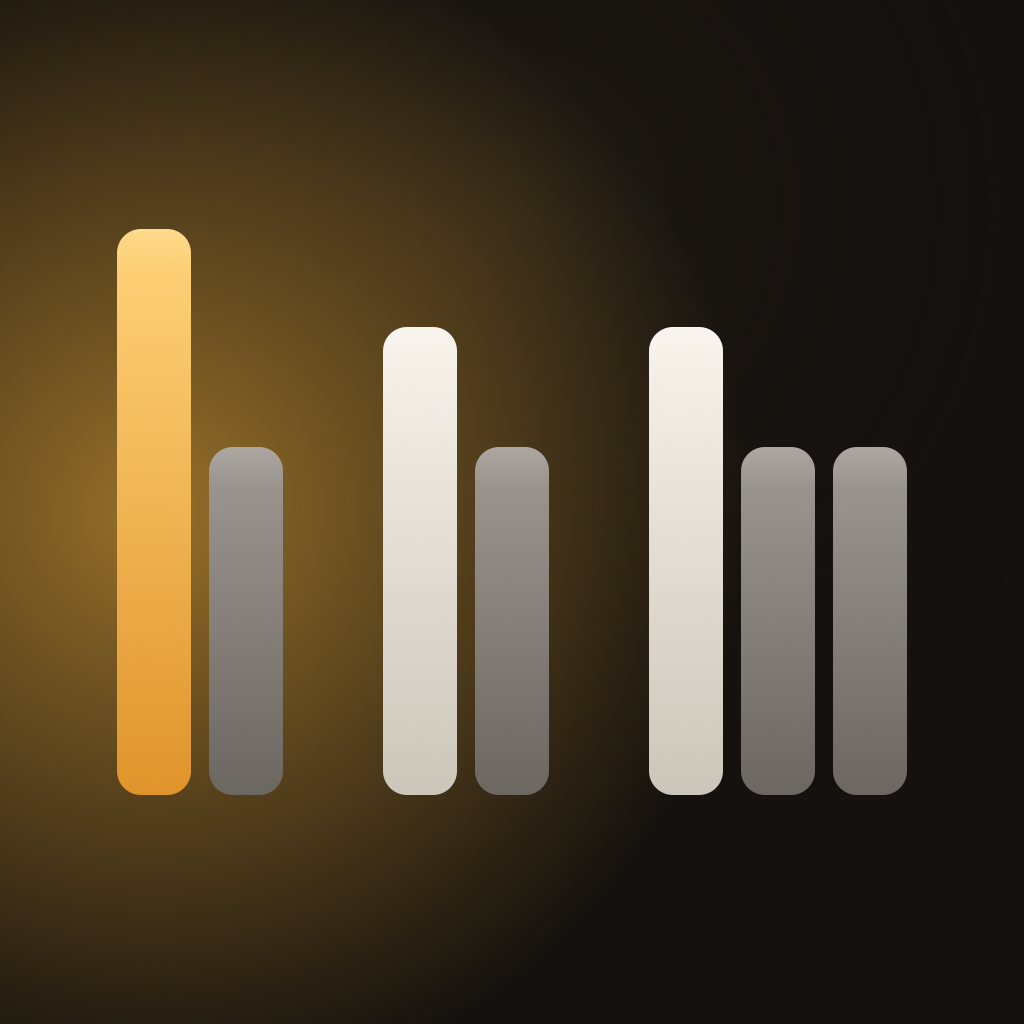
Odd meters, explained
What a meter is
A meter tells you how the beats of a bar are grouped. In 4/4 the beats come in a steady four. In 3/4 they come in a steady three. The top number of a time signature counts the pulses in a bar; the bottom number says which note value each pulse is, so in 7/8 a bar holds seven eighth-note pulses.
What makes a meter odd
In 4/4, 3/4 and 6/8 the bar divides into equal groups. In an odd meter it doesn't: the pulses fall into groups of two and groups of three, side by side. Seven pulses can't be split into equal groups, but they can be split into 2 + 2 + 3. That mix of short and long groups is what gives 5/8, 7/8, 9/8 or 11/8 its lopsided, forward-leaning feel.
Grouping in twos and threes
The same number of pulses can be grouped in more than one way, and each grouping sounds different.
- 7/8 as 2 + 2 + 3: two short groups, then a long one.
- 7/8 as 3 + 2 + 2: the long group comes first.
- 7/8 as 2 + 3 + 2: the long group sits in the middle.
The bar lasts exactly as long in all three. What changes is where the group starts fall, and those are the points you feel.
Counting the groups
Count each group from one, and say the group starts louder:
one two, one two, one two three for 7/8 as 2 + 2 + 3.
You are no longer counting to seven; you are counting small groups that you already know how to feel. Count 3 + 2 + 2 as one two three, one two, one two, and notice how different it feels at the same tempo.
Feeling the long group
The group of three is the long group. It is a little longer than its neighbors, and that small stretch is the character of the meter. Practice it slowly: let the group of three lean, then resolve into the next group start. When it stops feeling like "one extra beat" and starts feeling like one longer step, you have internalized the meter.
The meters in Odd Meter
Each meter below lists the groupings Odd Meter offers.
4/4
Four steady pulses per bar. The reference point for most music.
3/4
Three steady pulses per bar: the waltz.
6/8
Six eighth-note pulses, felt either as two groups of three (3 + 3) or as three groups of two (2 + 2 + 2): the same bar felt two ways. Both are regular, not odd.
5/4
Five quarter-note pulses, grouped 3 + 2 or 2 + 3. "Take Five" is in 5/4, felt as 3 + 2.
7/4
Seven quarter-note pulses, grouped 2 + 2 + 3, 3 + 2 + 2 or 2 + 3 + 2.
5/8
Five eighth-note pulses, grouped 2 + 3 or 3 + 2: the smallest odd meter.
7/8
Seven eighth-note pulses, grouped 2 + 2 + 3, 2 + 3 + 2 or 3 + 2 + 2. Balkan folk dances use it widely: the rachenitsa is felt as 2 + 2 + 3, and the lesno as 3 + 2 + 2.
9/8
Nine eighth-note pulses. Grouped 3 + 3 + 3 it is an even, rolling triple; with a single three among twos (2 + 2 + 2 + 3 and its rotations) it is an odd meter. "Blue Rondo à la Turk" is in 9/8 felt as 2 + 2 + 2 + 3, with every fourth bar as 3 + 3 + 3.
11/8
Eleven eighth-note pulses. Odd Meter offers 3 + 3 + 3 + 2, 2 + 2 + 2 + 2 + 3, 2 + 2 + 3 + 2 + 2, 3 + 2 + 3 + 3 and 2 + 3 + 3 + 3. The Balkan kopanitsa is felt as 2 + 2 + 3 + 2 + 2.
Tempo and the note value
The tempo readout counts pulses per minute, in the meter's note value: eighth notes in 7/8, quarter notes in 7/4. Changing the note value relabels the number; it never changes the speed of the click. What differs between meters is how many pulses a bar holds.
Practicing with Odd Meter
- See it. The grouping display shows the pulses in their groups and lights the current pulse as you play.
- Hear it. The click marks the start of the bar, the start of each group, and the plain pulses differently, so you can tell 2 + 2 + 3 from 3 + 2 + 2 without looking.
- Change the grouping. Step through the groupings of the same meter and compare them at the same tempo.
- Odd Meter Pro: gap training. The click drops out for a number of bars so you keep the time yourself, then returns to show how you did. With Fade out first, the click thins before each silence: every pulse, then only the group starts, then only the downbeat, then nothing, so the silence arrives by degrees. With Moving click, the click plays only on the pulses you choose and never on the downbeat, so you supply the one yourself; it can walk to a later pulse every few bars.
- Odd Meter Pro: tempo coach. The tempo moves step by step toward a target as you practice, and can return to where you started.
- Odd Meter Pro: sequences. Chain meters together and practice the switch from one to the next.